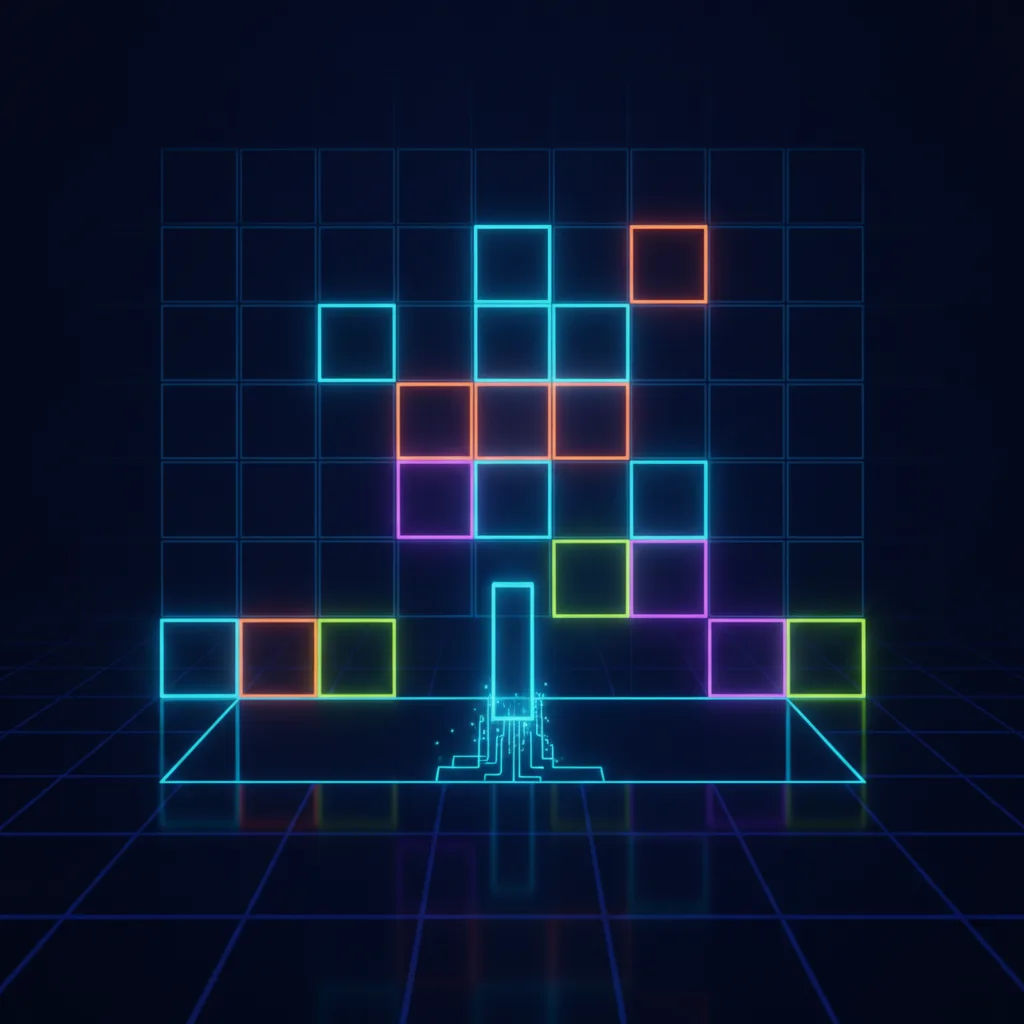
PIECE POOL
7 Tetrominoes
4-cell permutations (Free polyominoes: 5, with reflections: 7)
CANONICAL MATRIX
10 × 20
200 cells of spatial buffer, zero error allowance
NES KILLSCREEN
Level 29
Gravity hits 1 cell/frame (60 drops/sec) before modern game crash levels
■ PIECE PLACEMENT TRAINER & FLUSH CHECKER
Pick a piece, rotate, target an insertion column, and inspect board overhangs and buried cavities in real time.
MATRIX_10x12_VIEWPORT
Lines Cleared: 0
Buried Holes (Cavities):
0
Peak Stack Height:
0 / 12
Surface Ruggedness (Bumpiness):
0
T-Slot Detected:
—
Select piece placement. Aim to keep the rightmost column 9 open if building a clean Tetris well!
Flat Surface Heuristic
A low surface variance (bumpiness < 3) maximizes placement candidates for S, Z, and O pieces. Avoid creating solitary spikes of height 2+ unless reserving an I-well.
The Right-Well Doctrine
Classic NES players overwhelmingly stack columns 0 through 8, reserving column 9 for Tetris line clears. Modern Guideline games permit center-well setups for combo multipliers.
Zero Overhang Discipline
Placing an L or T piece flat over an open indent creates a covered cavity. Every hole requires clearing all lines above it before it can be closed. Fix holes immediately.